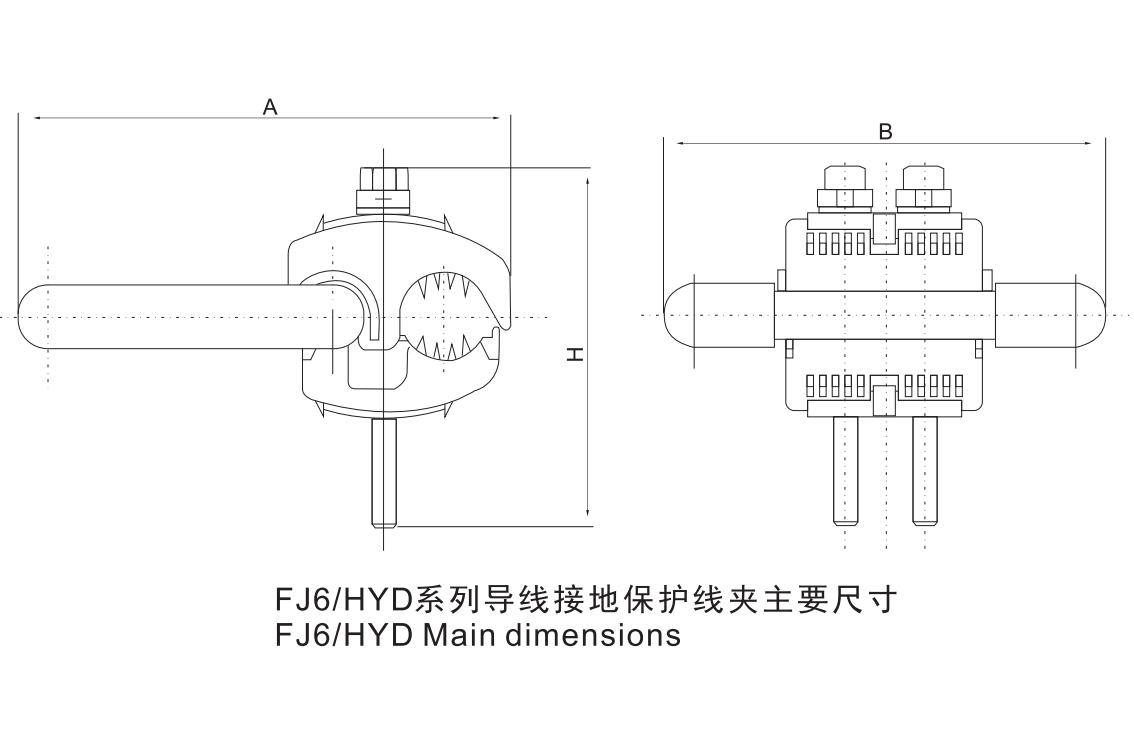


FJ6/HYD Series Branch Type Insulation Piercing Connector — Flame-retardant Version(1kV)
product features
- Optional flame-retardant version available for ZR/NH cables requiring higher fire-safety performance.
- All components are flame-retardant and compliant with 960°C glow-wire and vertical burning tests.
- Connector body made of high-strength, flame-retardant insulating material resistant to mechanical and climatic stress.
- Waterproof construction withstands 1 kV insulation test under water without breakdown.
- Sealed branch end-cap prevents moisture ingress.
- Suitable for live-line or de-energized installation.
Detailed introduction
Flame-retardant Version Features
- Optional flame-retardant version available for ZR/NH cables requiring higher fire-safety performance.
- All components are flame-retardant and compliant with 960°C glow-wire and vertical burning tests.
- Connector body made of high-strength, flame-retardant insulating material resistant to mechanical and climatic stress.
- Waterproof construction withstands 1 kV insulation test under water without breakdown. • Sealed branch end-cap prevents moisture ingress.
- Suitable for live-line or de-energized installation.
Application
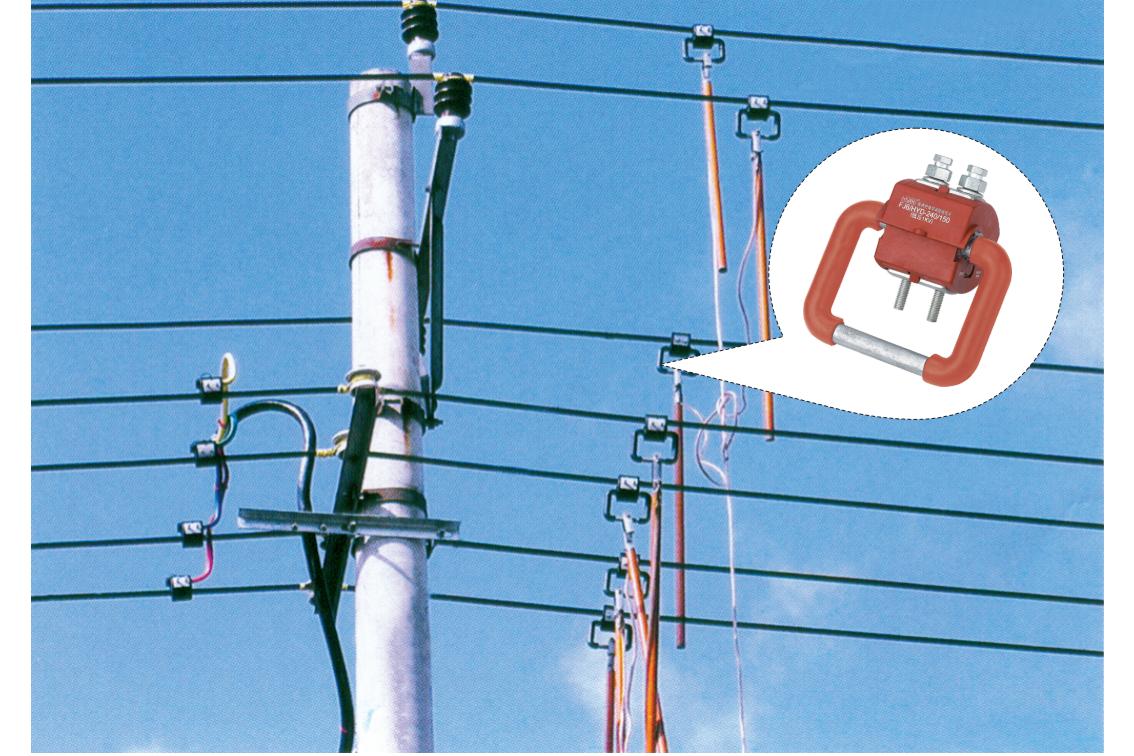
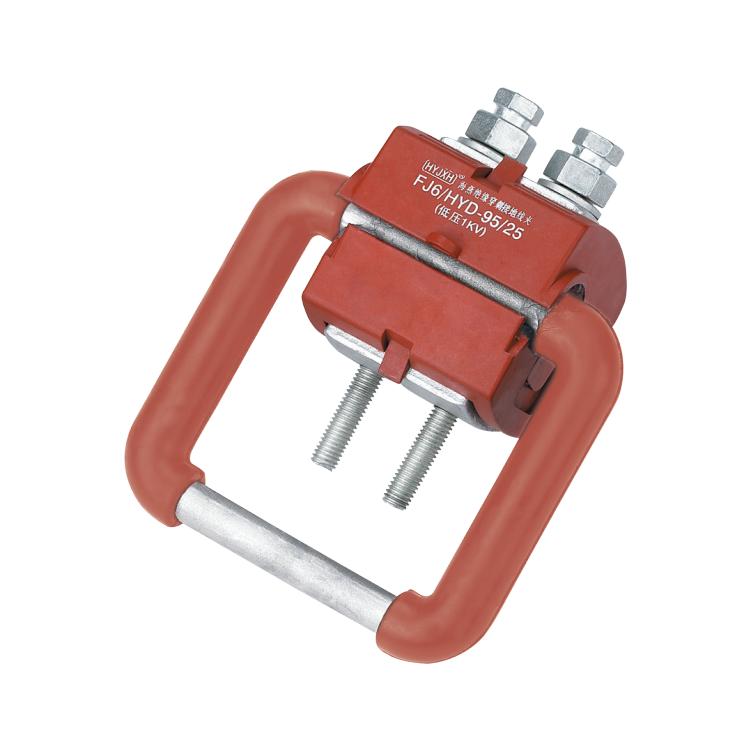
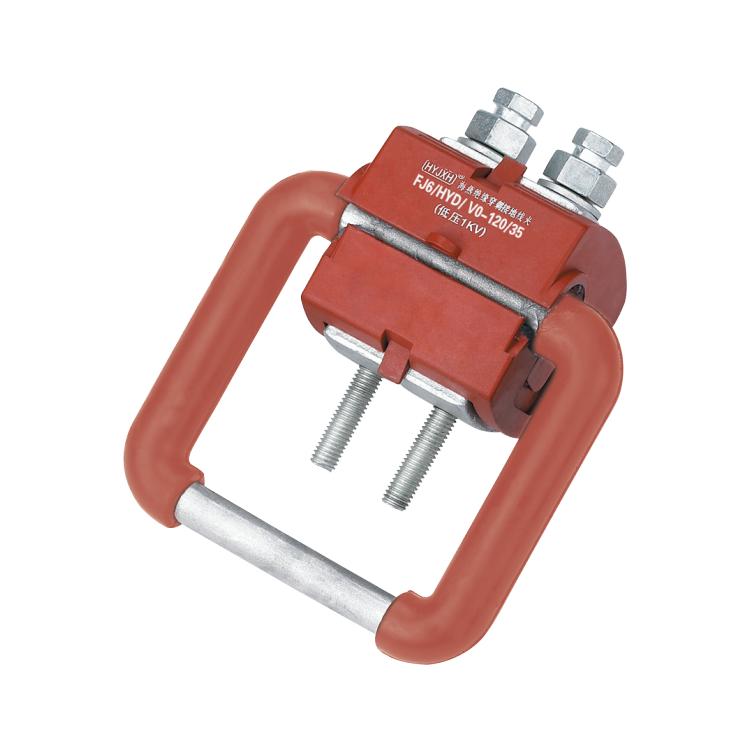
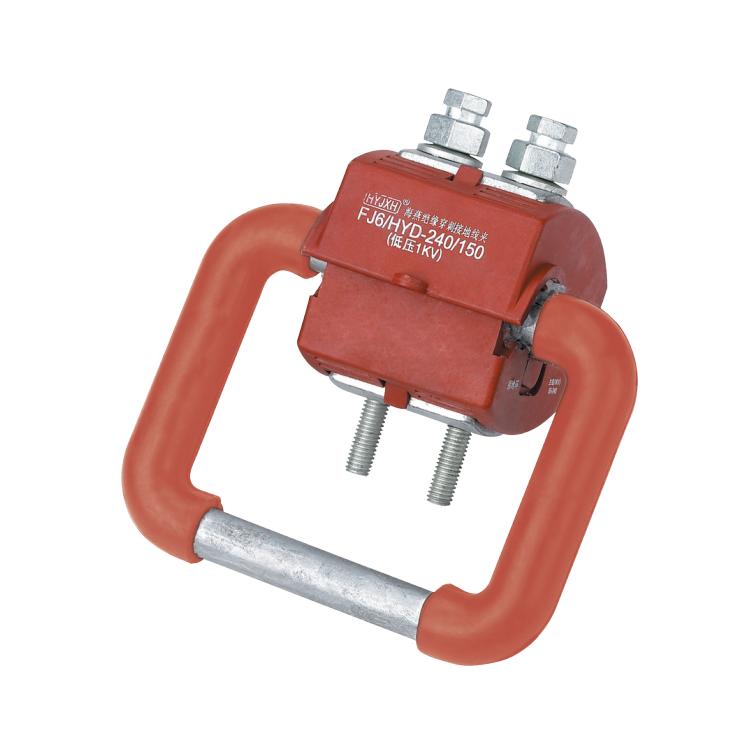
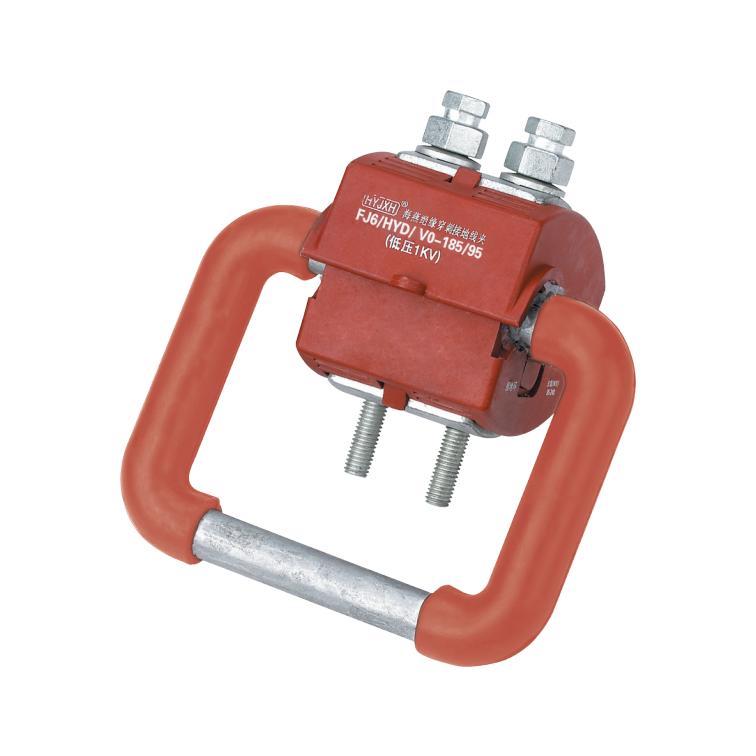
The FJ6/HYD series earthing type insulation piercing connector is used for establishing protective earthing and equipotential bonding in 1 kV overhead insulated distribution systems.
It provides a reliable earthing path by connecting insulated conductors to the earthing network, ensuring the safety and continuity of low-voltage distribution circuits.
Key Specifications
 |
| |||||||
 |
| |||||||
 |
| |||||||
 |
|
Installation and Operation
- Install and secure the main insulated conductor at the designated earthing point.
- Remove approx. 0.6 m of the outer sheath without damaging the phase insulation.
- Prepare the earthing conductor of the required length and strip the sheath at the connection end.
- Position the earthing connector on the exposed section of the main conductor and tighten the shear-head bolts until they shear off to ensure proper contact pressure.