

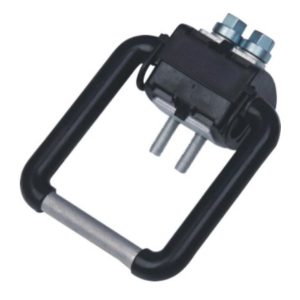
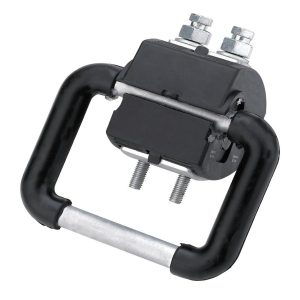
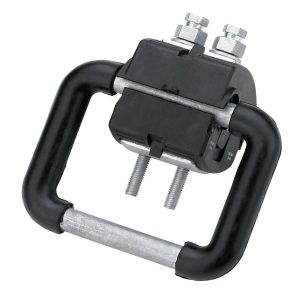
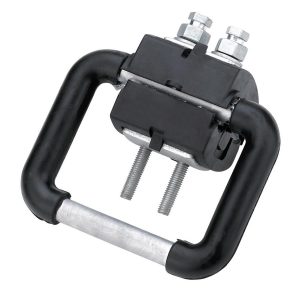
FJ6/HYD Series Earthing Type Insulation Piercing Connector(1kV)
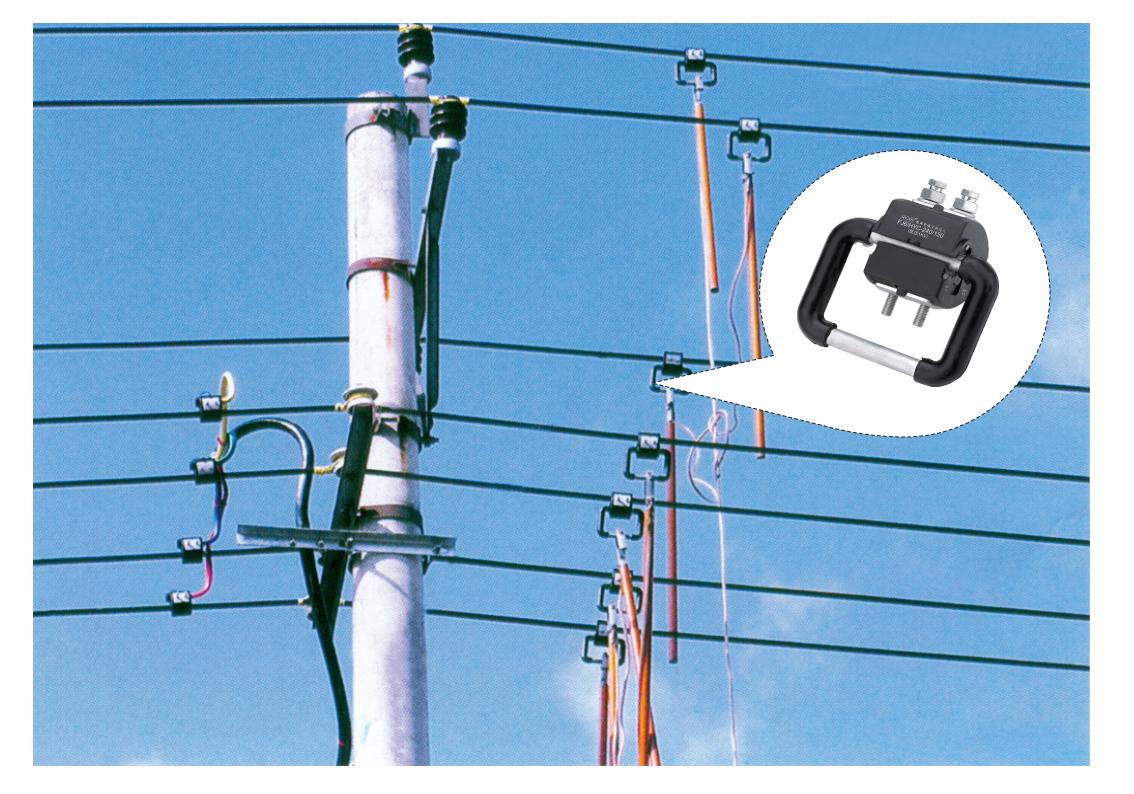
Typical applications include:
- Protective earthing of overhead insulated conductors
- Building earthing and equipotential bonding connections
- Earthing for street lighting poles and distribution pillars
- Earthing of high-rise building riser cables and outdoor feeder systems
Product Features:
- No-strip installation using torque nuts to ensure controlled piercing pressure and reliable earthing connection.
- Low contact resistance and minimal temperature rise, maintaining stable long-term electrical continuity in the earthing circuit.
- Fully sealed, high-insulation design filled with insulating grease to enhance dielectric strength and environmental protection.
- Wide applicability for copper, aluminum, and steel-aluminum conductors in 1 kV distribution networks, supporting equipotential bonding and protective earthing functions.
Detailed introduction
Application
The FJ6/HYD series earthing type insulation piercing connector is used for establishing protective earthing and equipotential bonding in 1 kV overhead insulated distribution systems.
It provides a reliable earthing path by connecting insulated conductors to the earthing network, ensuring the safety and continuity of low-voltage distribution circuits.
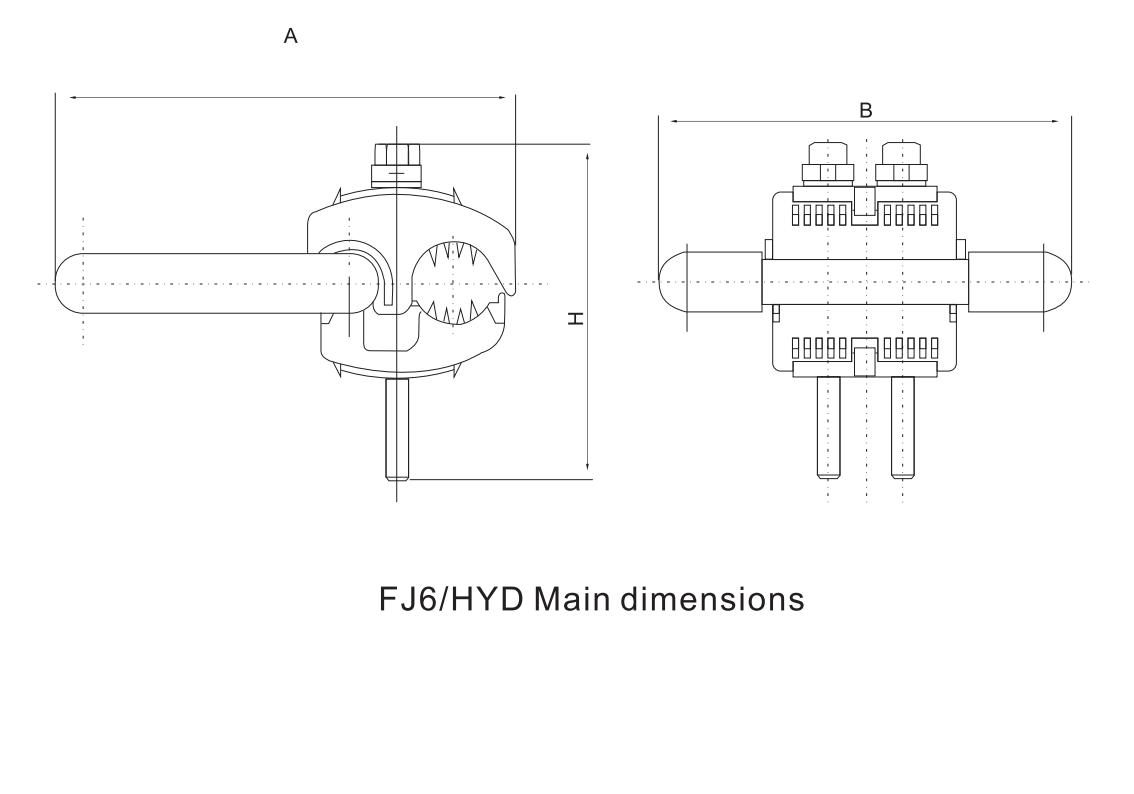
Key Specifications
 |
| |||||||
|
| |||||||
 |
| |||||||
|
| |||||||
 |
| |||||||
 |
|
Installation and Operation
- Install and secure the main insulated conductor at the designated earthing position.
- Remove approx. 0.6 m of the outer sheath without damaging the phase insulation of the main conductor.
- Prepare the earthing conductor to the required length and strip the insulation at the connecting end.
- Insert the earthing conductor fully into the connector’s earthing port to ensure proper engagement with the internal sealing element.
- Position the connector on the exposed section of the main conductor and tighten the torque nut(s) by hand.
- Continue tightening with a socket wrench until the preset torque nut(s) break off, indicating that the required installation torque has been achieved and the connection is correctly completed.