

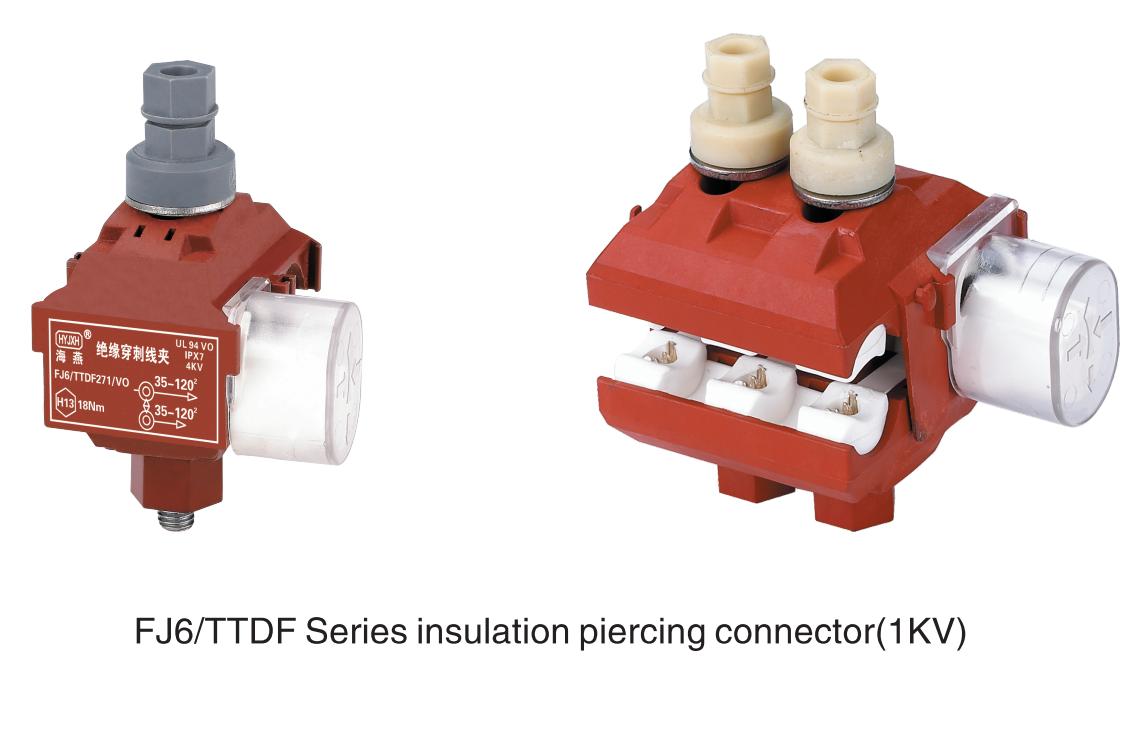
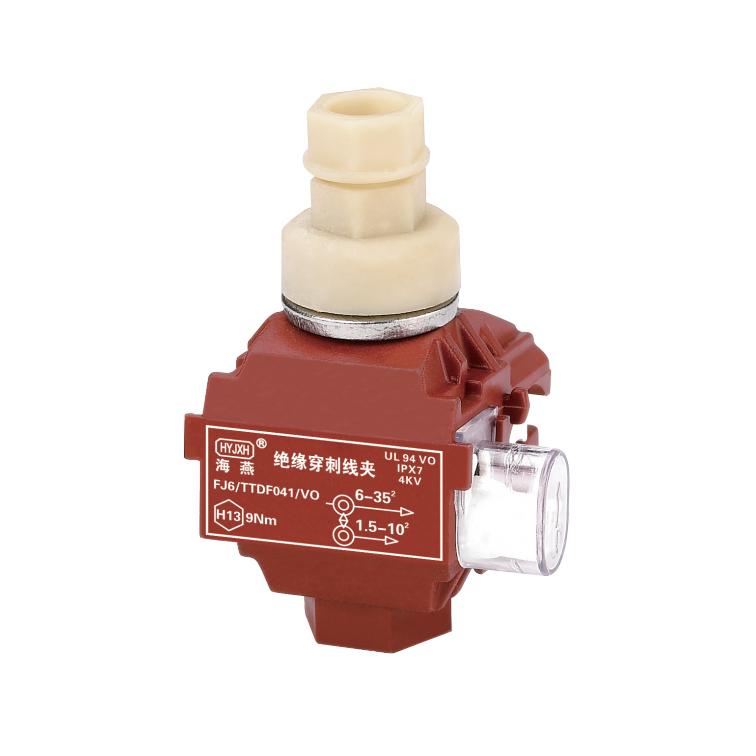
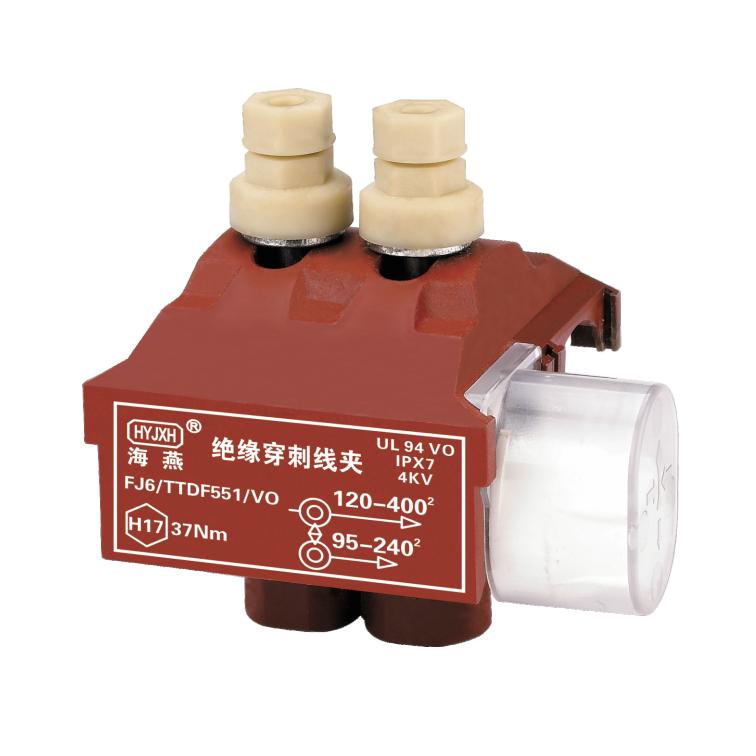
FJ6/TTDF Series Branch Type Insulation Piercing Connector — Flame-retardant Version(1kV)
Typical applications include
- Branching of ZR/NH building distribution cables
- LV overhead insulated cable connections
- Residential and commercial service-entry branching
- Street lighting distribution systems
- Urban and rural insulation retrofit projects requiring flame-retardant performance
Product Features
- Suitable for insulated copper or aluminum conductors; supports both live-line and de-energized installation.
- All components are flame-retardant and compliant with UL94-V0 and the 960°C glow-wire test, providing superior fire protection.
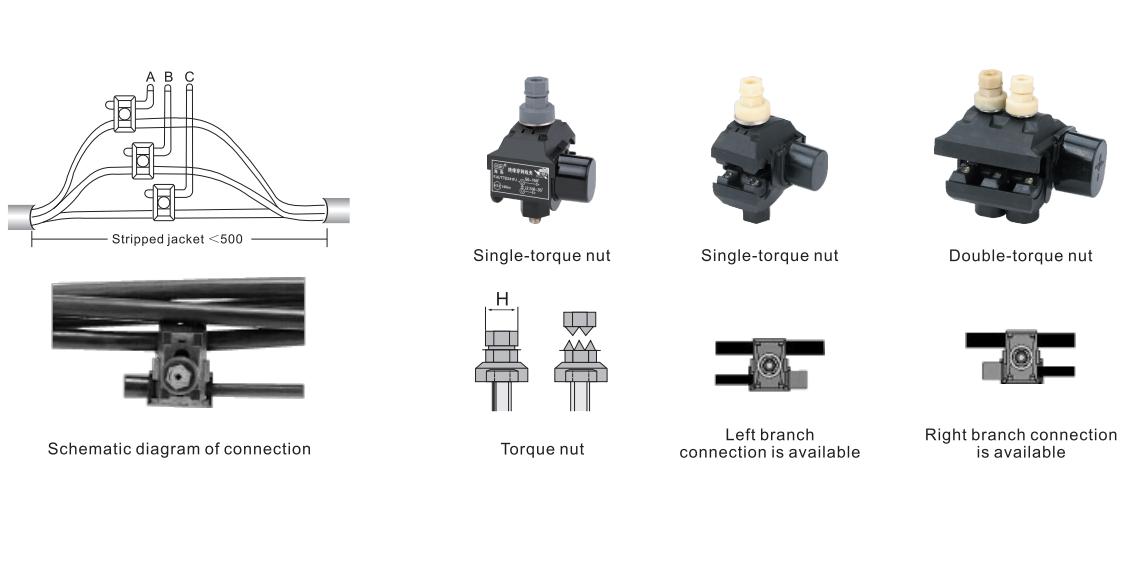
- No-strip installation: branching can be performed at any point along the main conductor without removing insulation or cutting the cable.
- High-strength flame-retardant insulating body resists mechanical stress, vibration, climatic aging, and UV exposure.
- Shear-head torque bolts with anti-corrosion treatment ensure constant piercing pressure and stable electrical contact.
- Waterproof structure withstands 4 kV submerged voltage with no breakdown.
- Sealed waterproof branch end-cap prevents moisture ingress; the cap may be positioned on either side as required.
- A safe, efficient, and cost-effective connection method for flame-retardant low-voltage cable networks.
Detailed introduction
Flame-retardant Version Features
- Optional flame-retardant version available for ZR/NH cables requiring higher fire-safety performance.
- All components are flame-retardant and compliant with 960°C glow-wire and vertical burning tests.
- Connector body made of high-strength, flame-retardant insulating material resistant to mechanical and climatic stress.
- Waterproof construction withstands 1 kV insulation test under water without breakdown. • Sealed branch end-cap prevents moisture ingress.
- Suitable for live-line or de-energized installation.
Application
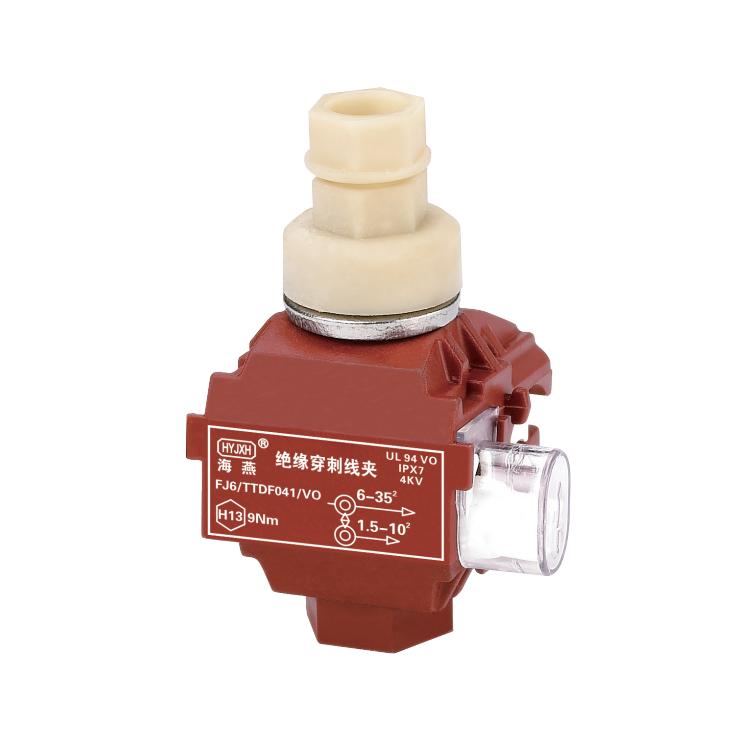
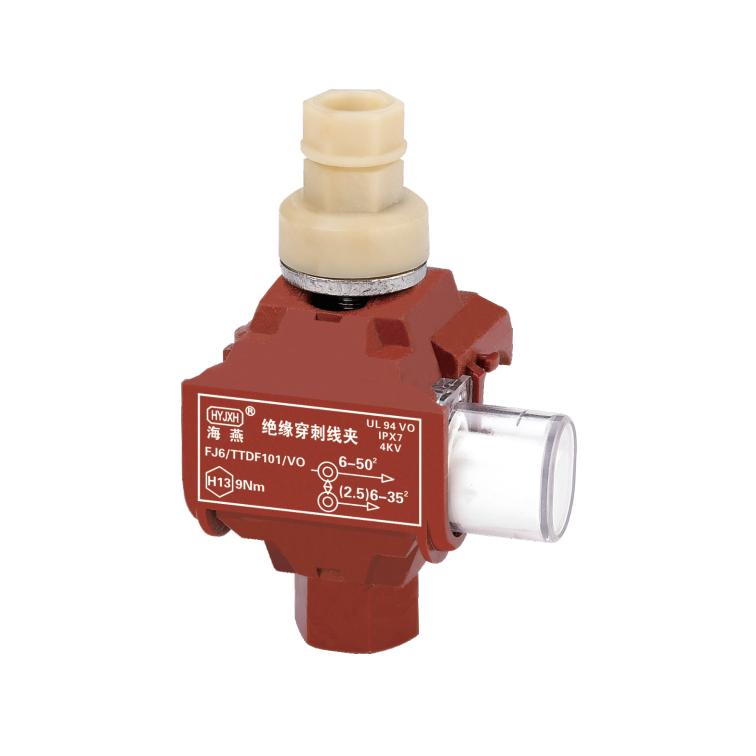
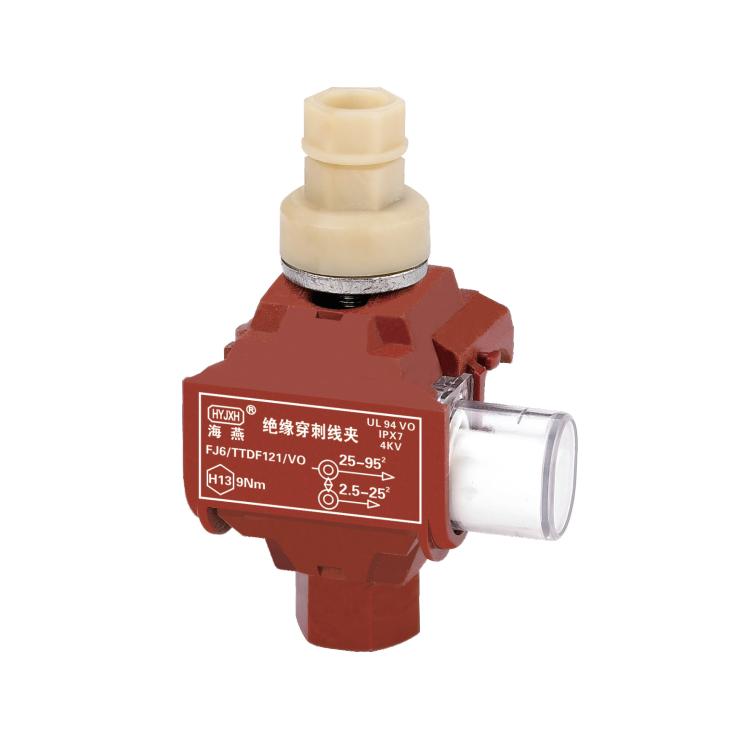
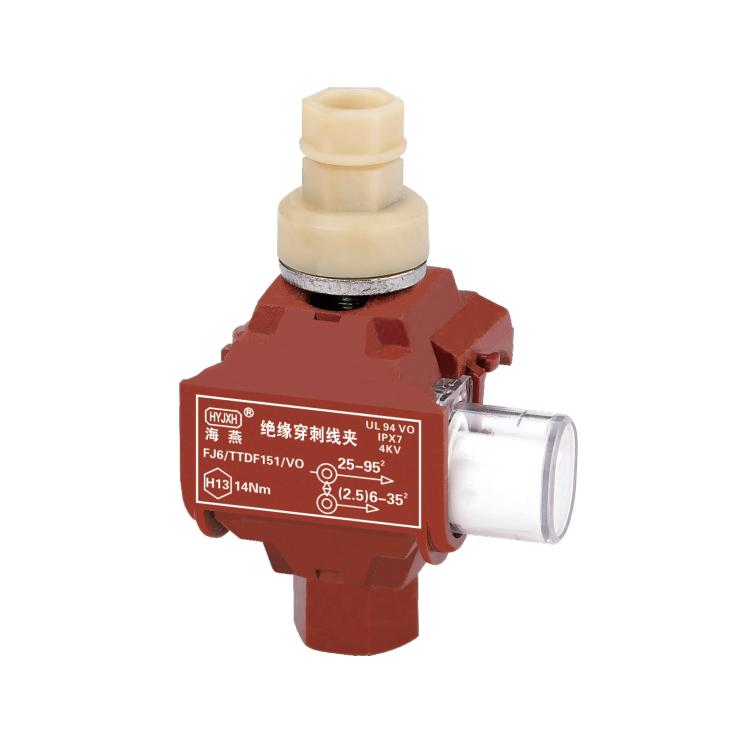
The TTDF series flame-retardant insulation piercing connectors are used for the branching of insulated conductors in building distribution systems, low-voltage overhead networks, service-entry cables, and street lighting circuits.
They are specifically designed for installations using flame-retardant (ZR) or fire-resistant (NH) insulated cables, providing enhanced fire-safety performance for LV distribution networks.
Key Specifications
 |
| ||||||||
 |
| ||||||||
 |
| ||||||||
 |
| ||||||||
 |
| ||||||||
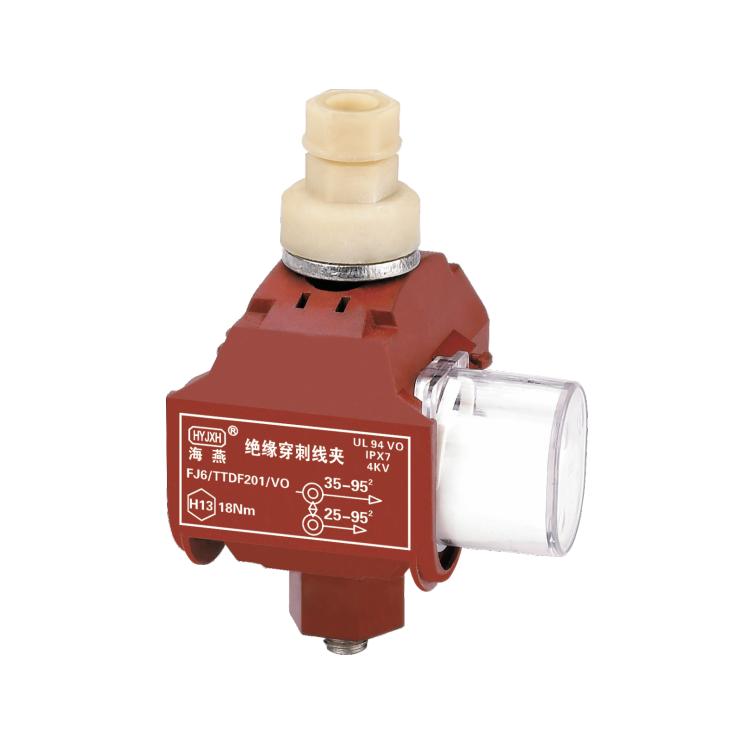 |
| ||||||||
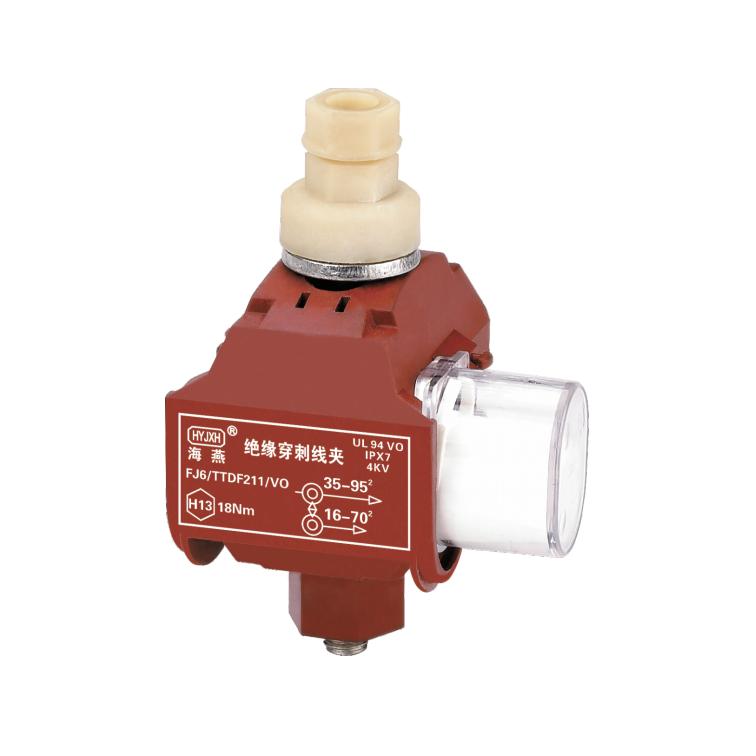 |
| ||||||||
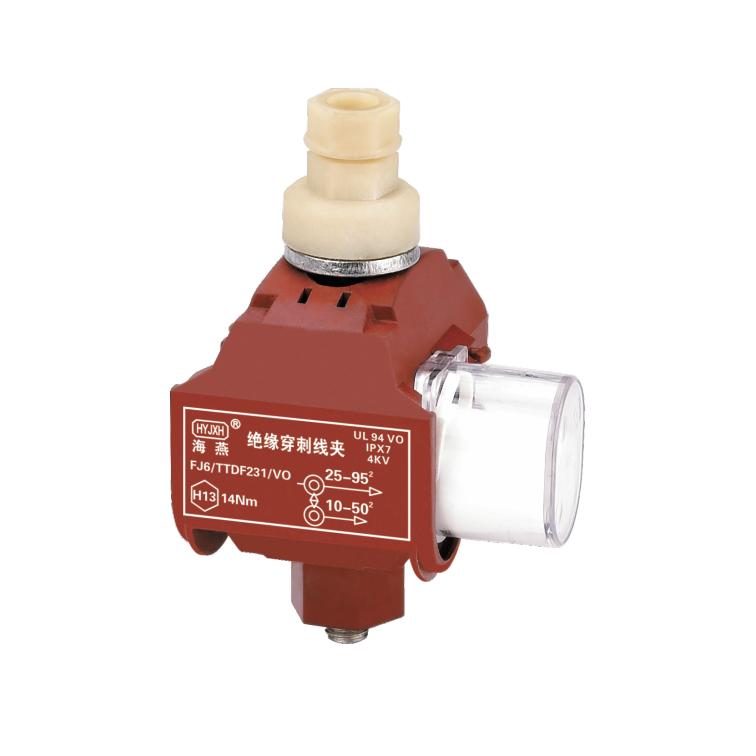 |
| ||||||||
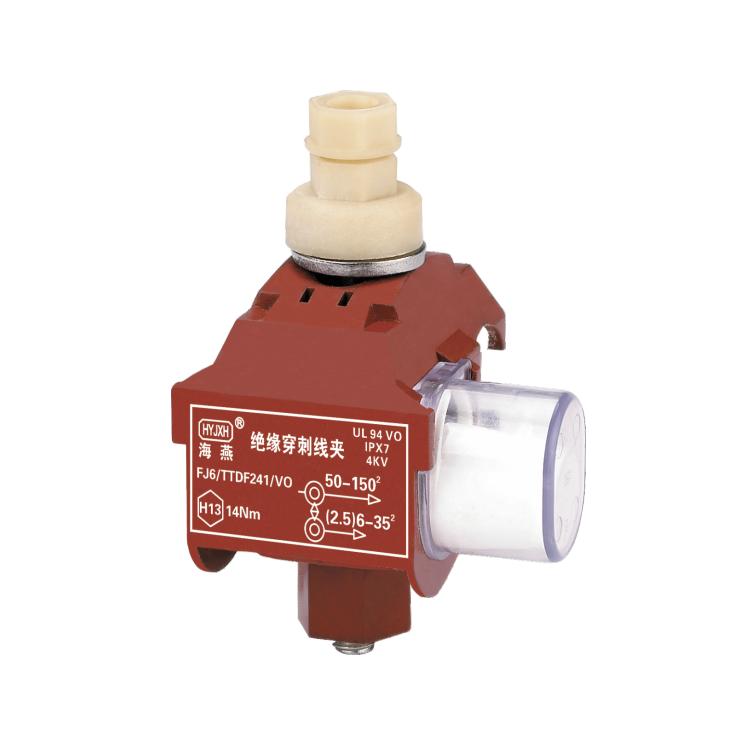 |
| ||||||||
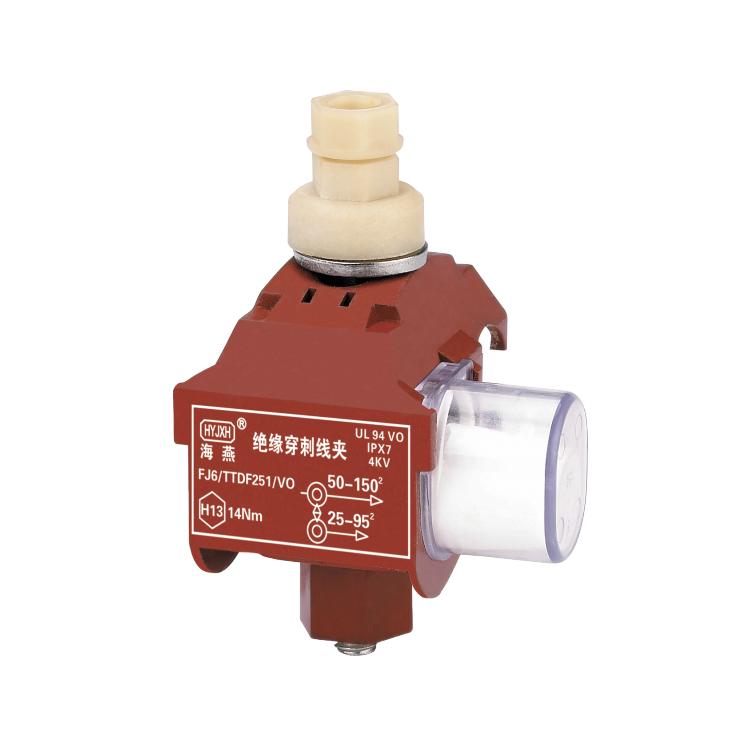 |
| ||||||||
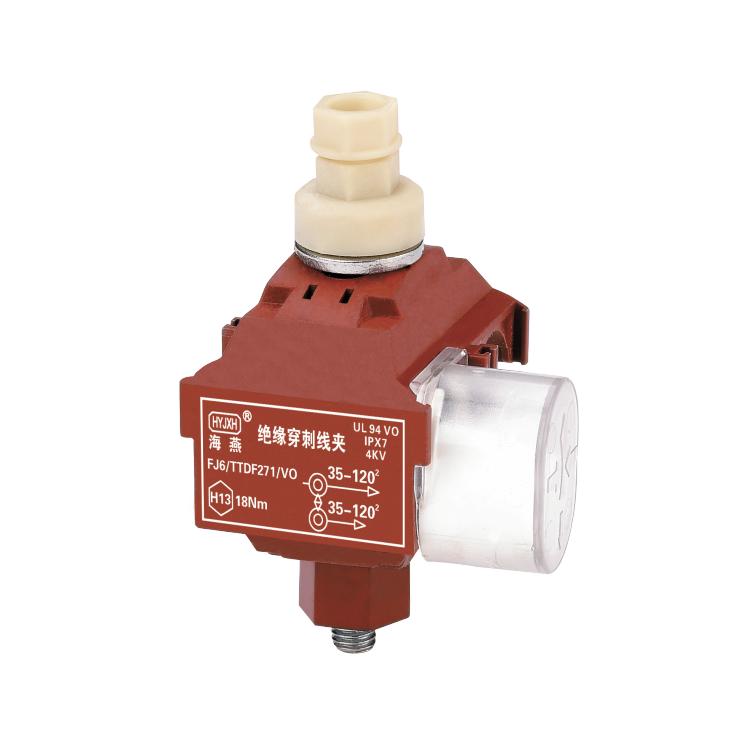 |
| ||||||||
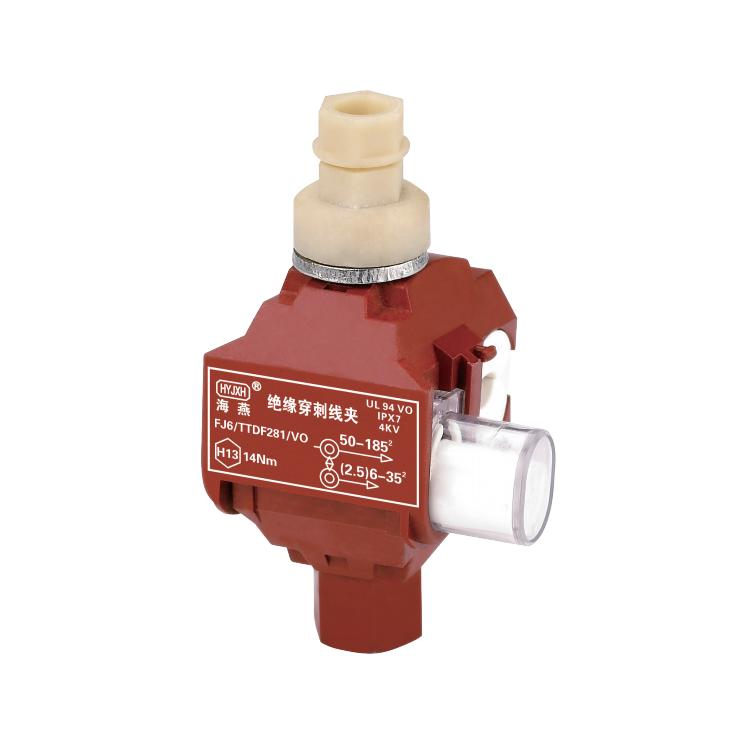 |
| ||||||||
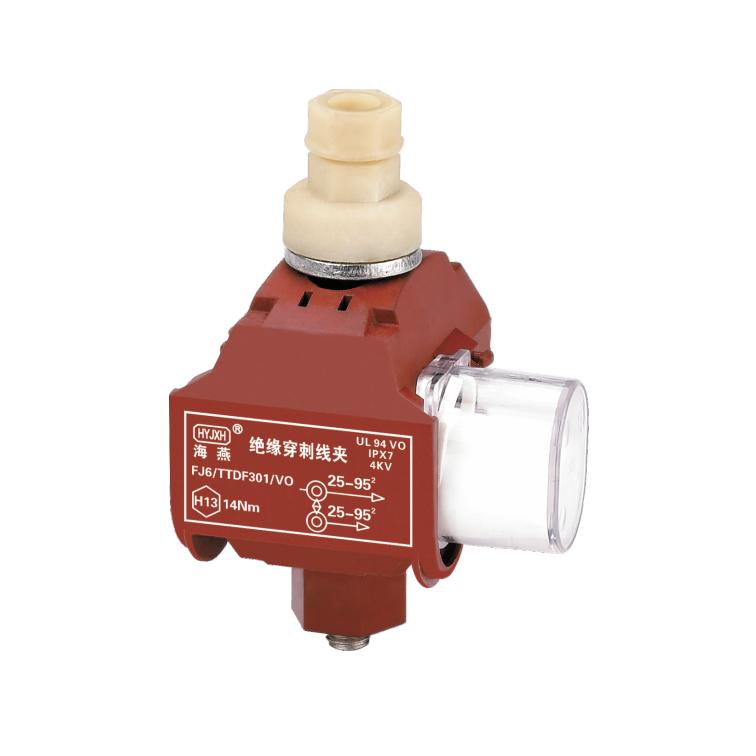 |
| ||||||||
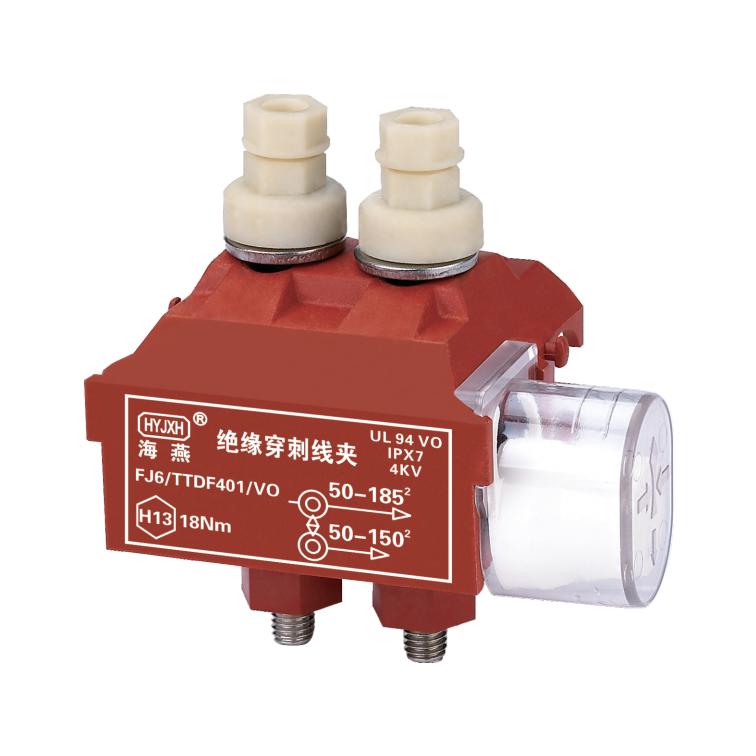 |
| ||||||||
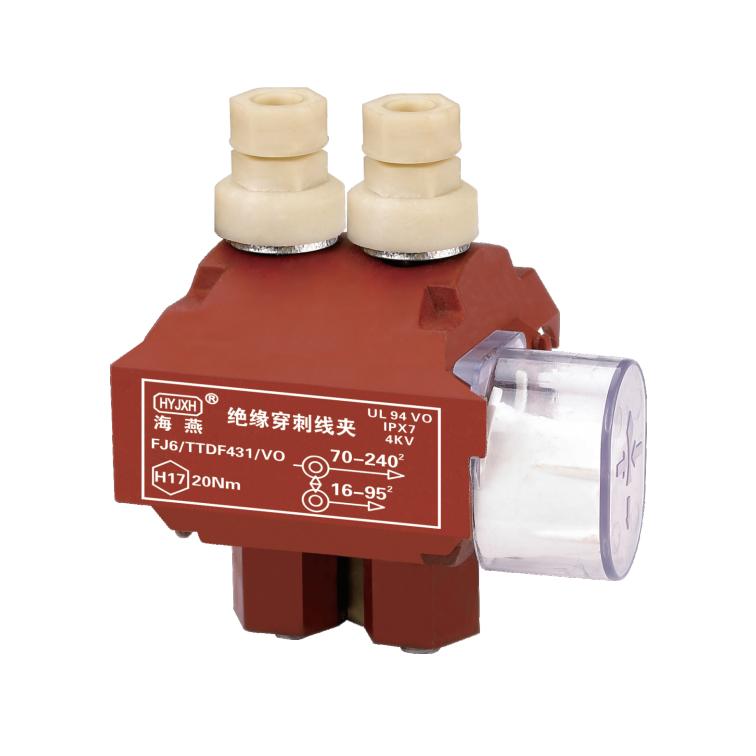 |
| ||||||||
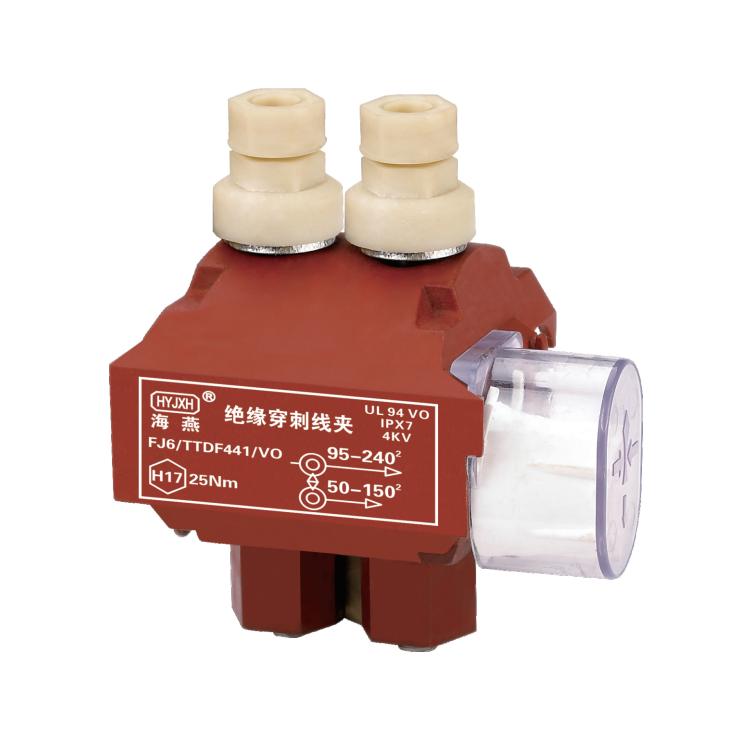 |
| ||||||||
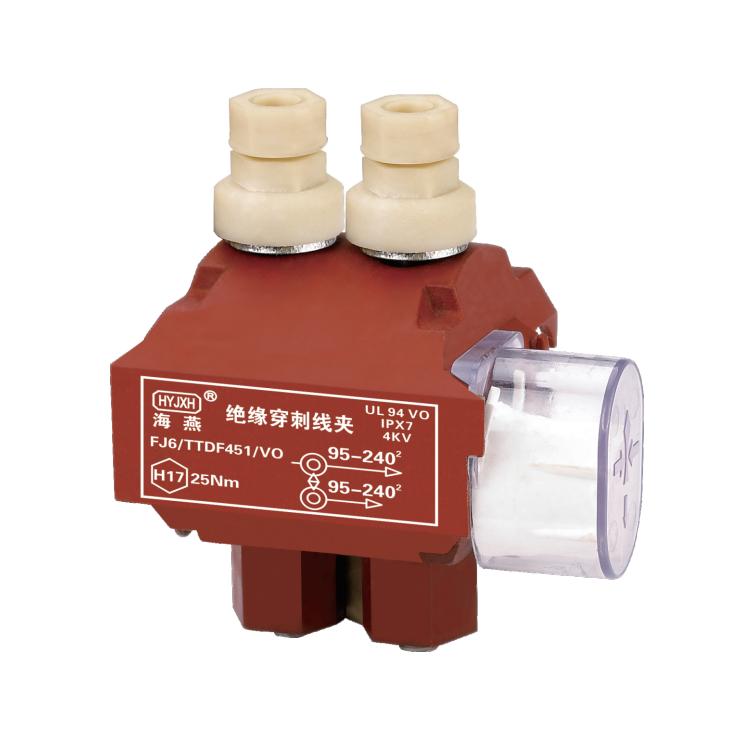 |
| ||||||||
 |
|
Installation and Operation
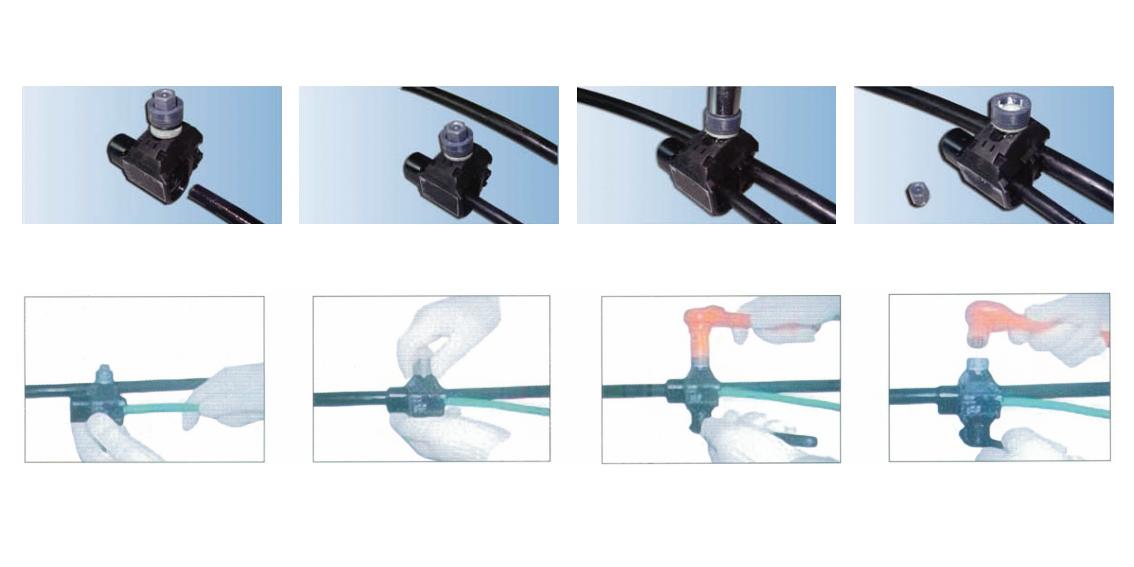
- Verify that the connector model matches the conductor size prior to installation.
- Suitable for single-layer insulated conductors; the connector may be removed but must not be reused.
- Conductors shall be clean and free from damage; preheat insulation if ambient temperature is below –10 °C.
- Adjust the branch end-cap position according to the branch cable insertion direction.
- Insert the branch conductor fully into the end-cap until it engages the internal sealing element.
- Position the connector at the tapping point on the main conductor and hand-tighten the top nut to secure it in place.
- Tighten the shear-head bolt using a socket wrench only; for dual-bolt models, tighten alternately.
- Continue tightening until the shear-head breaks off, indicating correct torque has been achieved. Supporting the lower body with a secondary wrench will reduce installation effort.